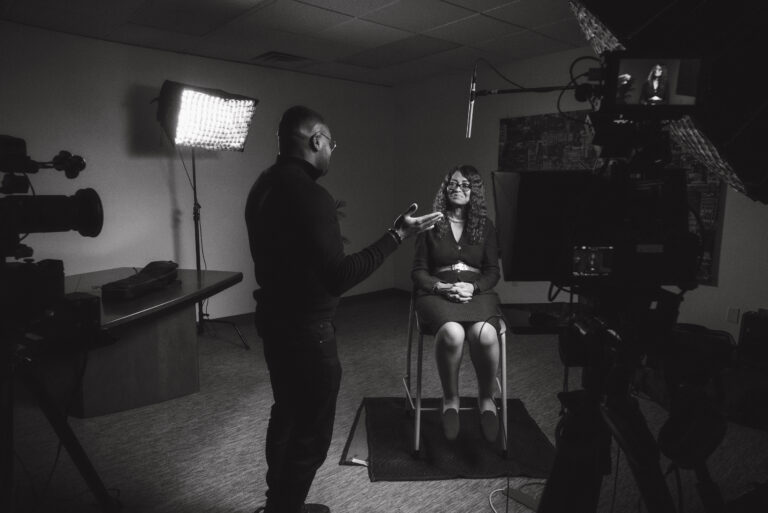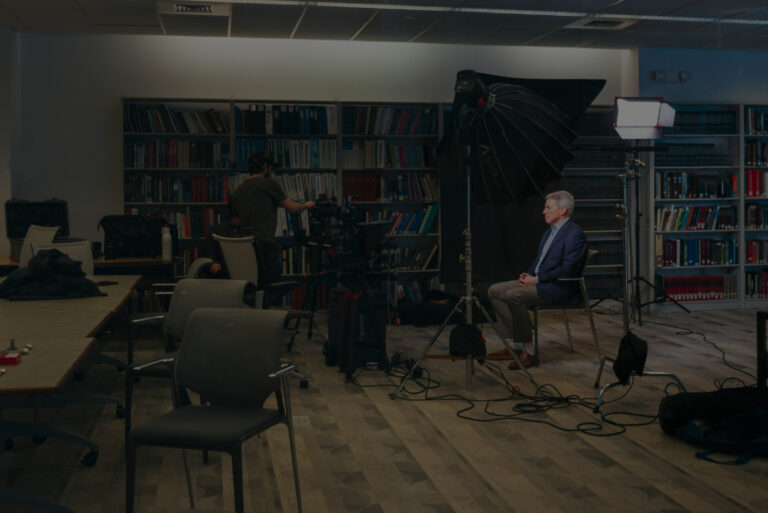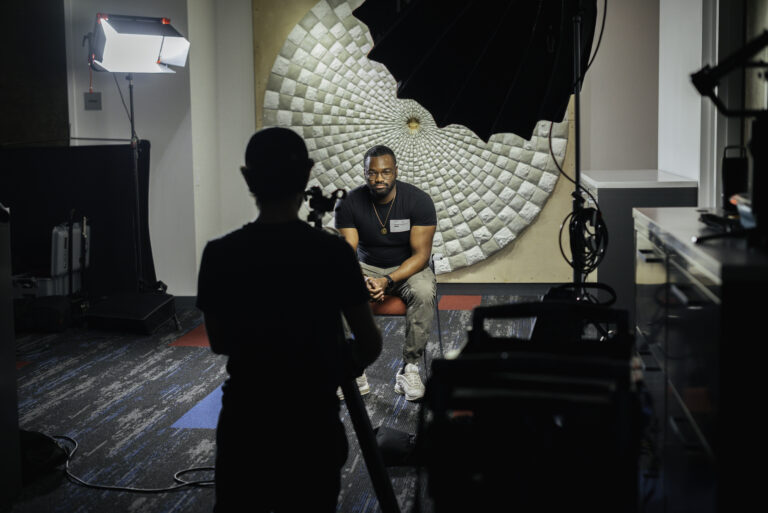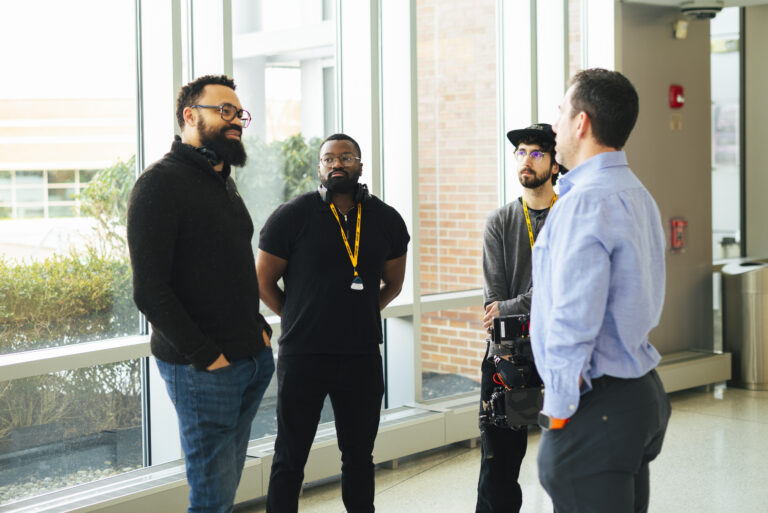

Every organization we’ve ever worked with has more stories than they know what to do with. Customer wins. Origin moments. Product breakthroughs. Team milestones. The conference room whiteboard fills up fast.
But this is what we’ve learned after a decade of producing films for medtech companies, nonprofits, & mission-driven organizations: The number of stories doesn’t matter. Finding the right one does.
One hero. One moment. One feeling. When you get that right, it doesn’t just become a video. It becomes what your sales team leans on, what your board remembers, what aligns a scattered organization around one clear purpose.
This is how we find it.
The Story Call, Not the Creative Brief
Most production companies start with a creative brief. A document. Bullet points about target audience, key messages, brand guidelines, deliverable formats. It’s organized. It’s professional. It misses the point.
We start with what we call a story call. It’s a conversation, usually 60 to 90 minutes, & it doesn’t look like a typical kickoff meeting. We don’t ask about messaging frameworks or competitive positioning. We ask different questions:
Who is the person whose life changed because of what you do? Tell us about them.
What was the moment you knew this product had to exist? Not the business case. The human moment.
If you could put one person on screen for three minutes & let them talk, who would it be? Why?
What’s the story your sales team tells in every meeting, the one that always lands?
These questions do something a brief can’t. They surface the stories that already have energy. The ones people tell without being asked. The ones that have been tested in real conversations & proven themselves. Those are the stories worth producing.
Why One Story, Not Ten
There’s a natural instinct, especially in large organizations, to try to tell every story at once. The patient story. The engineering story. The market opportunity story. The founder story. The clinical data story. All important. All real.
But when you try to tell ten stories at once, you tell zero. The audience retains nothing because nothing had room to breathe. The film becomes a highlight reel instead of a narrative. It’s impressive for thirty seconds & forgettable by the time someone walks back to their car.
One story, told completely, with the space to land, does more work than a dozen fragments.
We saw this play out with Stryker. A decade of engineering. Hundreds of people involved. Countless milestones worth documenting. But the film that captured the stakes of their work wasn’t a timeline of achievements. It was a film about the human reality their technology exists to serve. One story. One feeling. It carried the weight of everything else because it gave the audience a single place to stand & feel the impact.
That’s what the right story does. It doesn’t replace the other stories. It gives them context. It gives them gravity. It becomes the anchor that holds everything else in place.
How to Recognize the One Story When You Find It
Not every compelling anecdote is the one story. This is how we evaluate what we hear in story calls & pre-interviews.
It has a clear character. Not a demographic. Not a persona. A person. Someone with a name, a face, a life that existed before your product entered it. If you can’t picture the person, it’s not a story yet. It’s a concept.
It has a turn. Something changed. There was a before & an after. The patient was in pain, then they weren’t. The surgeon was skeptical, then they saw the results. The family was afraid, then they found hope. Without the turn, there’s no narrative momentum. The audience has nothing to follow.
It carries more than one message. The best stories are multivalent. Paula’s iovera story was a patient outcome story, but it was also a story about quality of life, about getting back to the things that define you. It worked for physicians evaluating the device, for patients considering the treatment, & for investors assessing the market. One story. Multiple audiences. That’s the signal that you’ve found something universal.
It makes people lean forward. This is the simplest test & the most reliable. When you tell this story in a room, do people lean forward? Do they ask questions? Do they want to know what happened next? If the story creates curiosity & emotional investment in a casual conversation, it will do the same on screen.
It connects to the mission, not just the product. The one story should illuminate why your organization exists, not just what it sells. Product stories have a shelf life. Mission stories endure. When the story speaks to the deeper reason your company does what it does, it becomes something people carry with them long after the video ends.
The Process: From Story Call to Story Lock
Finding the story is the first step. Protecting it through production is the harder part. This is how we move from discovery to a locked narrative that’s ready to film.
Story Call & Discovery
The initial conversation surfaces candidates. Usually 5 to 10 potential stories emerge from a thorough story call. We listen for energy, specificity, & emotional weight. We note which stories the client keeps coming back to, which ones they tell with the most detail & conviction. Those instincts matter.
Pre-Interviews
We talk to the potential subjects. Not on camera. Just a phone call or video chat. We’re listening for the same qualities: a clear character, a genuine turn, emotional authenticity, & comfort in sharing. Some people have extraordinary stories but freeze when asked to describe them. Others have simpler stories but tell them in ways that make you feel like you were there. Both matter. The combination of a great story & a natural storyteller is what we’re looking for.
Story Selection
From the pre-interviews, we narrow to one or two candidates. We present our recommendation to the client with a clear rationale: this is the story, this is why it works, this is what it can carry. Sometimes the client agrees immediately. Sometimes they push for a different direction. Both outcomes are fine. The important thing is that the decision is intentional, not default.
Story Architecture
Before we write a script or build a shot list, we map the story’s architecture. Where does it begin? What’s the tension? Where’s the turn? How does it resolve? What’s the feeling we want the viewer to carry out of the film?
This follows a spine that’s older than cinema: a character has a problem, meets a guide, gets a plan, is called to action, & either reaches a happy ending or avoids a tragedy. It works because it mirrors how humans have processed stories for thousands of years. We’re not reinventing narrative. We’re respecting it.
Story Lock
Story lock is the moment when everyone, production team, client, regulatory, agrees on the narrative framework. After story lock, we build the production plan around the story, not the other way around. Every location, every interview question, every camera setup serves the locked story. This is how you protect it. You decide what it is before the pressure of production can dilute it.
What Happens After You Find It
The one story doesn’t just become a video. It becomes the organizing principle for your content strategy.
The hero film tells the full story in 2 to 4 minutes. This is the flagship piece, the one that plays at conferences, lives on your website, & opens sales presentations.
Sales enablement cuts extract the most powerful 60-second moments for use in physician meetings & hospital evaluations.
Social media content pulls individual quotes, reactions, & visual moments into formats designed for the platforms where your audience spends time.
Internal communications use the story to align the organization. When the sales team, the clinical team, & the executive team are all telling the same story, the message compounds at every touchpoint.
Future content builds on the foundation. The second patient story makes more sense because the first one established the approach. The physician interview is richer because it can reference the patient’s experience. The product video has emotional context that a standalone demo would lack. Everything connects back to the one story that started it all.
This is what we mean when we say the one story moves everything else. It’s not a metaphor. It’s a practical reality. Organizations that invest in finding & telling their one story build content ecosystems that work harder, last longer, & cost less over time than organizations that produce content without a narrative center.
The Stories We Carry
We’ve been doing this long enough to know that certain stories stay with you. Paula’s morning without pain. Lea’s relief after surgery. Three siblings facing the same diagnosis at the same dinner table. A decade of engineering distilled into one film about what’s at stake.
Those stories didn’t become memorable because of production values. They became memorable because they were true, specific, & human. Because someone decided that the story mattered more than the spec sheet. Because a camera was there when a real person described a real moment that changed their life.
Every organization has that story. The one that, if told right, moves fundraising, alignment, hiring, sales, belief, everything else. The question isn’t whether it exists. It’s whether you’ve found it yet.
That’s what we do at Beard & Bowler. We find it, protect it, & put it on screen. Story first. Video second.
If you’re ready to find yours, let’s have a conversation. See what this looks like in practice on our our work page. Read about what happens when a medtech company tells a real story, or learn about the production process that brings it to life. For more detail, visit our services or FAQ.
Frequently Asked Questions
What if our leadership team disagrees about which story to tell?
That’s common, & it’s actually a good sign. It means there are multiple compelling stories to choose from. Our process is designed to surface the strongest candidate through pre-interviews & objective evaluation criteria, not internal politics. We present a recommendation with clear reasoning, & we facilitate the conversation until there’s alignment. The worst outcome is trying to tell multiple stories in one film. We’ll push back on that because it serves no one.
How do you balance storytelling with the need to communicate product information?
The story carries the product information. When a patient describes their experience, they naturally communicate what the device did for them. When a surgeon talks about why they chose this technology, they’re explaining the mechanism in human terms. The information is there. It just arrives through narrative instead of bullet points. For the detailed clinical & technical content, that’s where supporting videos like MOA explainers & launch assets come in. The story film opens the door. The supporting content walks through it.
Can this approach work for organizations outside of medtech?
Absolutely. We’ve applied the same philosophy to nonprofits, educational institutions, & healthcare systems. Any organization that exists to serve people has a story worth telling. The principles are universal: find the person, find the moment, find the feeling. The context changes. The approach doesn’t.
What if we don’t have dramatic patient stories?
You probably do, but they might not look dramatic on paper. The most powerful stories aren’t always the most extreme. A patient who can play with their grandchildren again. A surgeon who sleeps better knowing their patients are in less pain. A researcher who spent ten years on a problem & finally saw it solved. Drama lives in specificity, not scale. The shift to video is happening precisely because these everyday moments of impact are so compelling on screen.
How much does it cost to go through the story discovery process?
The story call & pre-interview phase is built into our production process, not a separate line item. When you engage us for a film, the discovery work is part of the package. It’s the foundation that makes the production work. Trying to skip it to save money is like building a house without a foundation to save on concrete. It doesn’t end well.