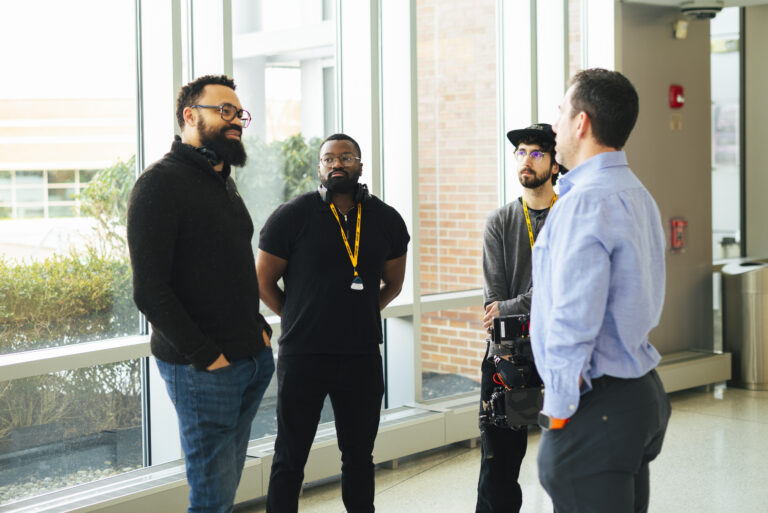

We were standing in a hospital hallway in New Jersey, waiting for a surgeon to finish a procedure so we could film an interview. The marketing director turned to our DP & said, “I have to be honest. The last crew we hired made a beautiful video. Nobody watched it.”
That sentence has stuck with us for years. Because it captures the core tension of medical device video production: the gap between what looks impressive in a conference room & what actually moves a physician, a patient, or a procurement committee to act.
We’ve spent over a decade making films for medtech companies. From patient stories with Pacira BioSciences on EXPAREL recovery stories to our work for Stryker, we’ve learned that the difference between a video that sits on a hard drive & one that changes a product’s trajectory comes down to something simple: did you protect the story?
This guide is everything we know about getting medical device video production right. Not from a textbook. From the rooms we’ve walked into, the shoots we’ve run, & the calls we’ve had with marketing teams who were tired of content that checked a box but didn’t move anyone.
Why Medical Device Video Production Is Different from Every Other Kind
If you’ve ever hired a generalist video agency to produce medtech content, you already know the problem. They show up with a great reel. They shoot beautiful footage. Then you spend three weeks in legal review because they didn’t understand FDA promotional guidelines, or they filmed a patient without the right consent forms, or the surgeon they interviewed made an off-label claim on camera.
Medical device video production lives inside a set of constraints that most production companies have never encountered:
Regulatory compliance isn’t optional. Every claim, every testimonial, every visual demonstration has to hold up under FDA review. That means your production partner needs to understand the difference between cleared indications & off-label territory before they write a single question for an interview.
Clinical environments are unforgiving. You can’t ask a surgeon to repeat a procedure because the lighting wasn’t right. You can’t pause a patient consultation to adjust a mic. You get one shot, & you have to be ready for it.
The audience is sophisticated & skeptical. Physicians have seen hundreds of product demos. They can spot a scripted testimonial from the first sentence. Hospital administrators care about outcomes, not production values. Your video has to earn trust in the first ten seconds or it’s done.
The stakes are real. These aren’t consumer products. These are devices that go into people’s bodies. The stories you tell have to honor that reality. When we filmed Paula’s story for iovera, a woman who came back from debilitating knee pain to play golf & ride her bike again, we weren’t making a marketing asset. We were documenting a life that changed. The marketing value came because the story was true.
The Types of Medical Device Videos That Actually Get Used
We’ve seen a lot of medtech companies build video libraries that look comprehensive on paper but collect dust in practice. What actually gets pulled up in sales meetings, shared at conferences, & embedded in email campaigns.
Patient Story Films
These are the workhorses. A real patient, a real problem, a real outcome. When we produced the iovera patient series, we followed people like Mary Ellen, who went from being a pain patient to becoming a practitioner who now treats others with the same technology. That arc, from suffering to advocacy, is something no product spec sheet can replicate.
Patient stories work because they let a physician see their own patients in the narrative. They let a procurement officer feel the human impact behind the line item. They make the abstract concrete.
The key is casting. Not everyone’s story translates to film. You need people who are naturally articulate, whose outcomes are genuinely compelling, & who are comfortable on camera. We spend more time on pre-interviews than most companies spend on the entire pre-production phase.
Mechanism of Action & Product Demonstration
Surgeons want to see how a device works. Not a 3D animation that looks like a video game. They want to see the actual device, in an actual procedure, doing what it’s supposed to do. Clear, steady, well-lit footage that respects their intelligence & their time.
The best MOA videos pair clinical footage with simple, direct narration. No jargon pileups. No breathless claims. Just: the device, how it works, what the surgeon sees during the procedure.
Surgeon Testimonials & Key Opinion Leader Interviews
KOL videos are where most medtech companies go wrong. They sit a physician in front of a camera, hand them talking points, & get a stiff, scripted performance that convinces no one. The physician looks uncomfortable. The audience can tell.
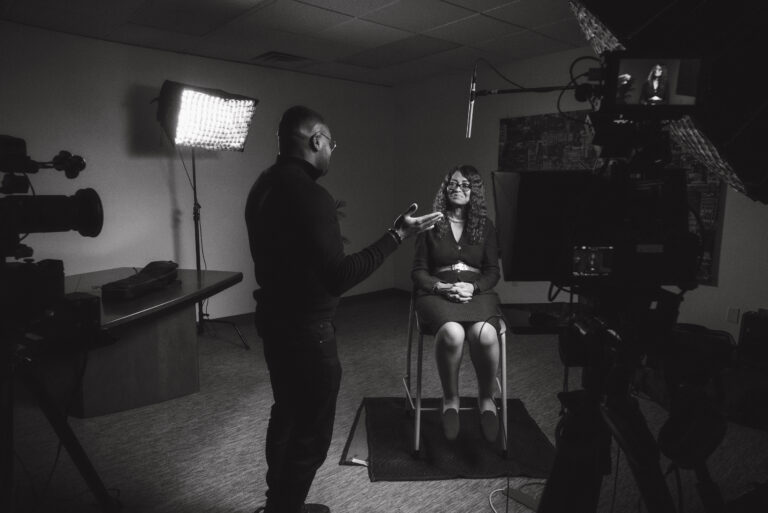
Our approach is different. We have a conversation. We ask about the first time they used the device. We ask about a specific patient. We let them talk about what surprised them. The best KOL footage comes from the moments between the talking points, when a surgeon forgets the camera is there & just talks about why they believe in what they’re doing.
Launch & Conference Films
When you’ve spent years getting FDA clearance & you finally have a product to bring to market, you need a film that captures the magnitude of that moment without overselling it. Something that plays on a 20-foot screen at a medical conference & makes people stop walking. Something that carries the launch forward through the critical first 90 days.
These films are about conviction. They’re about saying: we built this because we believe it will help people. The evidence speaks. The story speaks. Decide for yourself.
Internal & Training Videos
Sales teams need to understand a device before they can sell it. Clinical trainers need consistent messaging across regions. New hires need to understand the mission behind the product line. These videos aren’t glamorous, but they’re essential. We treat them with the same care because a sales rep who truly understands the patient impact will always outperform one who’s just memorized the spec sheet.
The Production Process: What to Expect When You’re Making Medtech Video
Every production company has a process. Ours starts in a place most don’t: the story call.
Not a creative brief. Not a scope document. A conversation about what matters. Who are the people affected by this device? What changed for them? What’s the one thing you want a viewer to feel when the video ends?
From there, the process looks like this:
Discovery & Story Development
We research the device, the clinical context, the competitive landscape, & the regulatory boundaries. We identify potential patient & physician subjects. We conduct pre-interviews to find the strongest stories. This phase takes longer than most clients expect, & it’s the reason the final product works.
Pre-Production & Compliance Planning
Scripts, interview guides, shot lists, location scouting, consent forms, regulatory review of all planned claims & messaging. We work with your legal & regulatory teams early, not as an afterthought. Every question we plan to ask, every visual we plan to capture, gets vetted before we load a single camera into a van.
Production
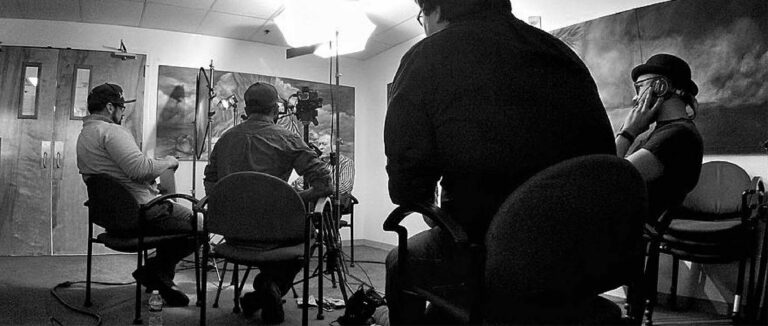
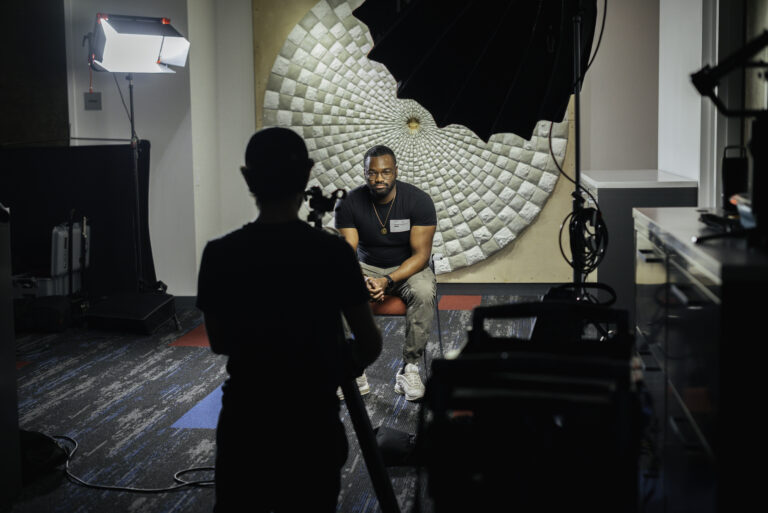
Small, experienced crews who know how to work in clinical environments. We’ve filmed in ORs, recovery rooms, physician offices, patient homes, & medical conferences. We know the protocols. We know when to be invisible & when to direct. We carry backup gear for everything because in a hospital, there are no second chances.
Post-Production & Review
Editing, color grading, sound design, graphics, & multiple rounds of review with your team. We build review cycles into the timeline from the start, because we know medtech review processes involve more stakeholders than most industries. Legal, regulatory, marketing, clinical, sometimes the C-suite. We plan for all of them.
Delivery & Distribution Strategy
A finished video without a distribution plan is a trophy on a shelf. We deliver in every format you need: full-length, cutdowns for social, vertical edits for mobile, conference-specific versions, web-optimized files, & raw assets for your internal team. We also help you think through where each piece lives & how it connects to your broader content strategy.
Choosing the Right Medical Device Video Production Partner
There are a lot of production companies that will tell you they can handle medtech. This is how to separate the ones who actually can from the ones who are figuring it out on your dime.
Ask about regulatory experience. Not “are you familiar with FDA guidelines?” but “tell me about a time a claim was flagged in review & how you handled it.” If they can’t give you a specific example, they haven’t been in the rooms that matter.
Look at their patient stories. Do the patients feel like real people or like actors reading a script? Can you see the emotion, or does it feel manufactured? The difference is obvious if you know what to look for.
Ask about their interview process. A production company that hands a physician a script is not the same as one that spends 45 minutes in a pre-interview finding the real story. The approach to interviews tells you everything about whether the final product will feel authentic.
Check their clinical set experience. Have they filmed in operating rooms? Do they understand sterile fields? Can they work around a surgical schedule without slowing anything down? This isn’t something you can learn from a YouTube tutorial.
Evaluate the story, not just the cinematography. Beautiful footage is easy. A story that makes a surgeon lean forward in their chair is hard. Watch their reel with the sound on & ask yourself: do I care about the people in this film? If the answer is yes, you’ve found someone who understands what medtech video is actually for.
Budget Realities: What Medical Device Video Production Actually Costs
We’re not going to give you a number & pretend it applies to every situation. But we can tell you how to think about it.
A single patient story film, done right, with proper pre-production, a day of filming, professional post-production, & multiple deliverable formats, typically runs between $15,000 & $40,000 depending on complexity, travel, & the number of interview subjects.
A comprehensive launch video package, including a hero film, cutdowns, social assets, & conference versions, can range from $50,000 to $150,000 or more. The variables are scope, locations, talent, animation needs, & how many review cycles your organization requires.
What we tell every client: the most expensive video is the one nobody watches. A $20,000 film that gets used by every sales rep for two years delivers more value than a $100,000 production that gets played once at a conference & forgotten. Budget should follow story, not the other way around.
Common Mistakes We See Medtech Marketing Teams Make
After years of doing this work, patterns emerge. Here are the mistakes we see most often, & the ones that are easiest to avoid.
Starting with the script instead of the story. If you write the script before you’ve talked to real patients & physicians, you’re guessing. The best scripts come from real conversations, not conference room brainstorms.
Treating video as a one-time project. The companies that get the most from video treat it as an ongoing program. They build a library over time. They capture stories at every opportunity. They think in terms of a content ecosystem, not a single deliverable.
Letting the product overshadow the patient. The device is the supporting character, not the hero. The hero is the person whose life changed. When you lead with the product, you get a commercial. When you lead with the person, you get something people actually share.
Skipping distribution planning. We’ve seen six-figure productions with no plan for where the videos would live or how they’d reach the target audience. Distribution strategy should start during pre-production, not after final delivery. If you’re telling a real story, you need to know who needs to hear it & where they are.
Underestimating the review timeline. Medtech review processes are thorough, as they should be. Build time for them. If your deadline doesn’t account for legal, regulatory, & clinical review, you’re setting yourself up for a rush job at the finish line.
The Real Measure of Medical Device Video
We’ve been doing this long enough to know that the real measure of a medical device video isn’t views, clicks, or even conversions. It’s whether the video made someone feel something true.
Did the surgeon who watched it remember a patient they helped? Did the sales rep who played it in a meeting see the prospect lean forward? Did the patient who shared their story feel like their experience was honored?
Those are the moments that matter. Everything else, the metrics, the ROI calculations, the conference booth traffic, follows from those moments.
If you’re looking for a production partner who understands that, who knows how to work in clinical environments, navigate regulatory requirements, & protect the stories that matter, we should talk.
That’s what we do at Beard & Bowler. Story first. Video second. Every time.
Frequently Asked Questions
How long does a typical medical device video production project take?
Most projects run 6 to 12 weeks from initial story call to final delivery. The timeline depends on the complexity of the shoot, the number of interview subjects, travel requirements, & your internal review process. We always build in buffer for regulatory review because that step takes as long as it takes, & rushing it helps no one.
Can you film in hospitals & operating rooms?
Yes. We’ve filmed in clinical environments across the country, including ORs, recovery rooms, & outpatient facilities. We understand sterile protocols, patient privacy requirements, & the logistics of working around surgical schedules. Our crews are small, experienced, & trained to be invisible when they need to be.
How do you handle FDA compliance in video content?
We work closely with your legal & regulatory teams from the start. Every interview question, every planned visual, every claim is reviewed before production begins. During filming, our directors are trained to steer conversations away from off-label territory. In post-production, we flag anything that might need additional review. We don’t replace your regulatory process. We build our production process around it.
What makes medtech video different from healthcare video in general?
Medical device video has specific regulatory constraints that general healthcare video doesn’t. Claims about device performance, patient outcomes, & clinical benefits all fall under FDA oversight. The production team needs to understand cleared indications, promotional guidelines, & the difference between a patient sharing their experience & a testimonial that implies a guaranteed outcome. It’s a narrow line, & experience is the only thing that keeps you on the right side of it. Read more about finding the story that matters within those constraints.
Do you help with video strategy or just production?
Both. We believe production without strategy is just making pretty things. Our process starts with understanding your goals, your audience, & your launch or campaign timeline. From there, we help you identify the right stories, the right formats, & the right distribution plan. Then we make the films. Visit our services page for more detail, or check our FAQ for additional questions.